
Designing an Outdoor Entertainment Area: Layout, Zones and What Ties It All Together
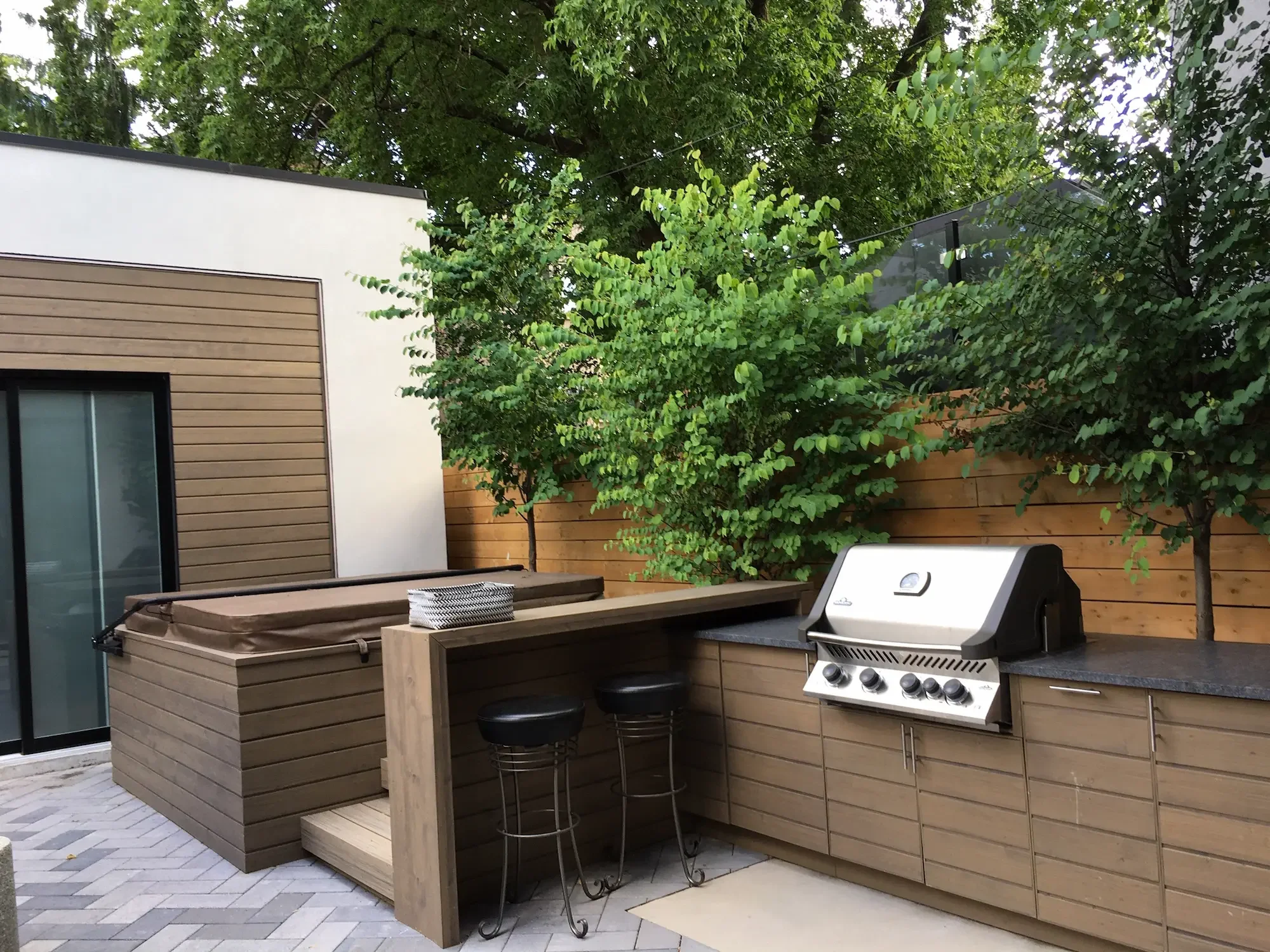
The best outdoor entertainment areas are not built feature by feature — they are planned as a single connected space. An outdoor kitchen next to a fire pit next to a sauna only works if the layout, materials, sightlines and utility connections are designed together from the start.
Brian Welch, owner of Odin Agnuk Ltd., approaches every outdoor entertainment project as a master plan — not a series of add-ons.
What zones make up an outdoor entertainment area?
A well-designed outdoor space is organized into distinct zones that serve different purposes while flowing naturally from one to the next.
Cooking zone. The outdoor kitchen or barbecue area— grill, prep counters, refrigeration, and storage. Position this zone where smoke drifts away from seating areas and where the cook can face guests, not the wall.
Dining zone. A dedicated table and seating area close enough to the kitchen for easy serving but far enough from the grill to avoid heat and smoke. Covered dining — under a pergola or roof structure — extends usability through rain and shoulder seasons.
Lounge zone. Comfortable seating arranged for conversation, not just for looking at a view. Sectionals, built-in benches, or deep-seat chairs grouped around a focal point like a fire feature or view corridor.
Fire zone. A fire pit or outdoor fireplace that anchors the social space. Fire draws people naturally and extends the season well into fall and early spring. Allow 3–5 feet of clearance between the fire feature and surrounding furniture.
Wellness zone. A backyard sauna, cold plunge, or hot tub — positioned for privacy with a clear path back to the house. This zone works best at the edge of the entertainment area, close enough to participate in the evening but separate enough for the experience to feel intentional.
How should zones connect to each other?
Zones should feel like rooms in a house — distinct but connected. The transitions between them matter as much as the zones themselves.
Sightlines. The cook at the grill should be able to see and talk to guests at the dining table and lounge area. If the cook is facing a wall or isolated behind an island, the kitchen becomes disconnected from the rest of the space.
Traffic flow. Guests should move naturally between zones without crossing through the cooking area or walking behind the grill. Plan primary circulation paths that connect the house, kitchen, dining, lounge, and fire areas without bottlenecks.
Material continuity. Using consistent decking, paving, or stone across zones ties the space together visually. Changing materials between zones — say, stone pavers around the fire pit and composite decking under the pergola — can define areas, but the palette should feel cohesive.
Level changes. A step up or step down between zones creates subtle separation without walls. A raised dining platform or a sunken fire pit lounge adds dimension and makes the space feel larger and more intentional.
What structures define the space?
Outdoor entertainment areas benefit from built elements that create a sense of enclosure without closing the space off.
Pergolas. Define a zone overhead — typically over the dining or kitchen area. Open-top pergolas provide partial shade and structure. Louvered pergolas with adjustable slats offer full rain and sun control.
Privacy screens. Architectural screens, slatted wood panels, or vertical plantings create boundaries between your space and neighbouring sightlines. Screens can also serve as windbreaks in exposed locations — particularly useful in Grey County and lakefront properties.
Covered structures. A roofed pavilion or extension of the house roofline provides full weather protection over the kitchen, dining, or lounge zone. This is the single most effective way to extend the outdoor season in Ontario.
Retaining walls and built-in seating. Low walls that double as seating define zones, add capacity for larger gatherings, and reduce the need for moveable furniture that gets stored for half the year.
What about lighting?
Lighting determines whether your outdoor space is usable after dark — and Ontario evenings are short for much of the year.
Task lighting. Essential over the grill and prep area. Directed, bright, and positioned to avoid shadows on the cooking surface.
Ambient lighting. String lights, recessed step lights, or low-voltage landscape lighting that creates warmth without flooding the space. The goal is atmosphere, not a floodlit parking lot.
Path lighting. Low-level lights along walkways, stairs, and transitions between zones for safe navigation in the dark.
Feature lighting. Uplighting on architectural screens, trees, or stone walls adds depth and makes the space feel larger at night.
All outdoor electrical requires GFCI-protected circuits and weatherproof fixtures. Plan lighting runs during the design phase — retrofitting after construction is expensive and disruptive.
How do you extend the outdoor season in Ontario?
Ontario's outdoor season is short if you do not design for it. The right combination of shelter and heat can extend usability from April through November.
Infrared heaters. Mounted under a pergola or roof structure, infrared heaters deliver directional warmth without heating the air. Effective in open and semi-enclosed spaces.
Fire features. A fire pit or fireplace provides radiant heat and a reason to gather outdoors on cool evenings. Gas-fired fire features offer instant, clean heat. Wood-burning adds atmosphere but requires more planning for smoke, clearances, and storage.
Covered or enclosed structures. A roofed area with drop-down screens or curtains can function as a three-season room — open in summer, enclosed against wind and rain in spring and fall.
Heated flooring. Radiant heat under stone or concrete paving keeps the surface comfortable underfoot and prevents ice buildup on walkways and dining areas through the shoulder seasons.
Where do you start?
Start with how you want to use the space — not with a product wishlist. The layout, zones, and infrastructure should be designed around how you cook, entertain, and relax, then the materials and features follow.
Brian Welch and the team at Odin Agnuk design outdoor entertainment areas as complete projects — coordinating the kitchen, sauna, fire features, screening, decking, lighting, and utility connections into one plan.
Have questions about designing your outdoor space? Contact us to discuss what works for your property and how you want to use it.
Odin Agnuk Ltd. designs and builds outdoor living spaces — including kitchens, entertainment areas, saunas, and exterior renovations — throughout Grey County and the Greater Toronto Area. View our exterior projects or explore our services.
The information provided in this guide is for general educational purposes only. Product specifications, warranties, and performance characteristics may change without notice. Odin Agnuk Ltd. is not liable for purchasing decisions made based on this content. Homeowners should independently verify all product information, consult manufacturer specifications, and conduct their own research before making material selections. Always confirm current product details with manufacturers or authorized dealers prior to purchase.