
Composite vs PVC vs PVC Composite: The Definitive Guide
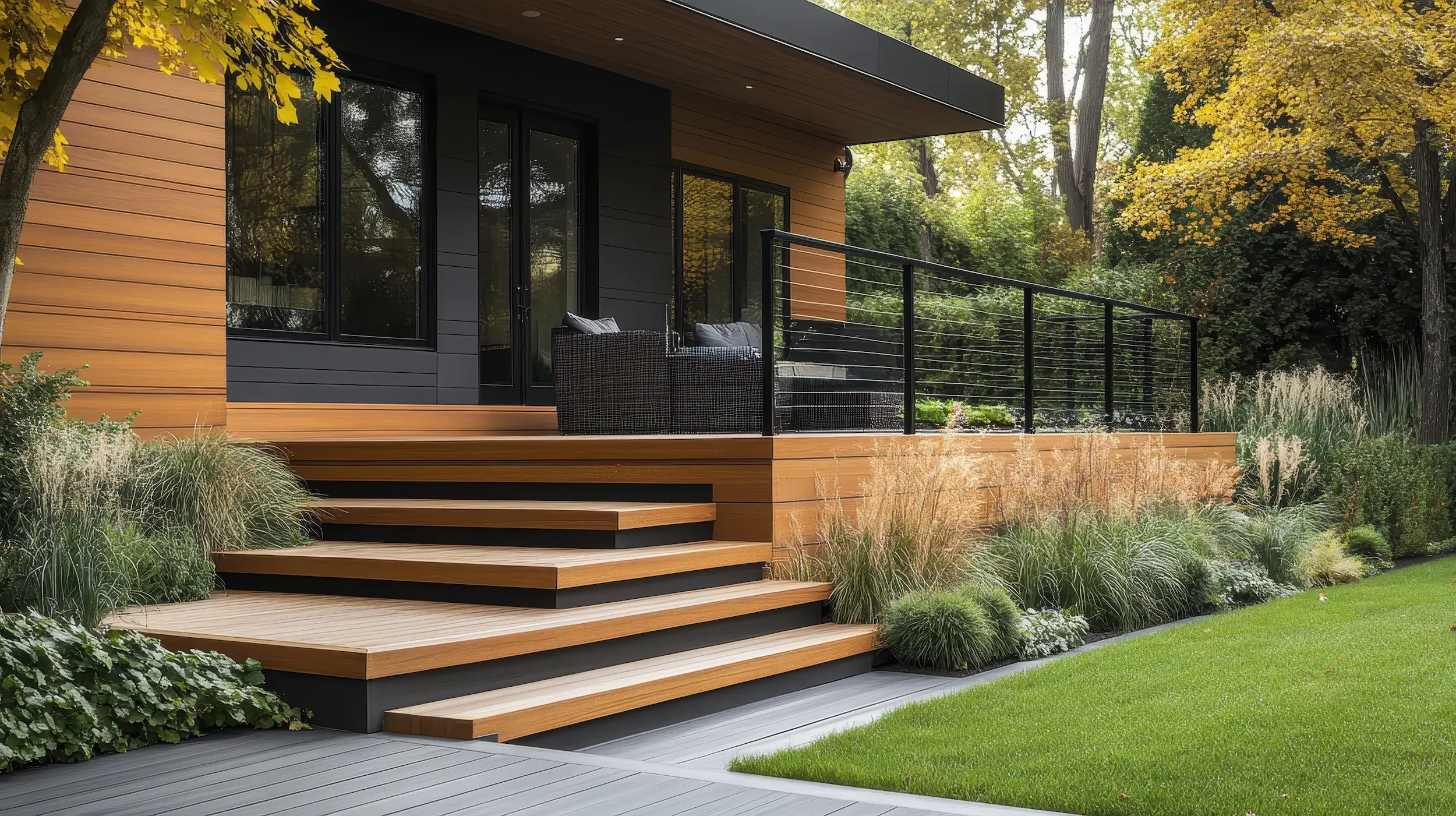
Three Materials, Not One
Composite and PVC are completely different materials. Composite contains wood fiber. PVC contains zero wood.
Capped composite and full PVC are completely different materials. Capped composite has a wood-plastic core. Full PVC is 100% synthetic polymer.
PVC lasts longer than composite. PVC decking and siding lasts 50+ years. Composite decking and siding lasts 25–30 years.
These are the most common decking and siding misconceptions. The term "composite" is often used as a blanket term for all synthetic decking and siding, but this is incorrect.
Note: "Siding" and "cladding" refer to the same exterior wall application. "Siding" is the common term in North America. "Cladding" is standard in the UK, Europe, and Australia.
Full PVC: The Premium Choice
Full PVC decking and siding/cladding is made from 100% synthetic polyvinyl chloride with zero wood content.
PVC is also called "cellular PVC," "full PVC," or "Advanced PVC." Because PVC contains no organic material, it cannot absorb moisture and is immune to mold, mildew, rot, and insect damage.
PVC is NOT composite. PVC contains zero wood. Composite contains wood fiber.
PVC is NOT capped composite. PVC is 100% synthetic throughout. Capped composite has a wood-plastic core with a polymer shell.
Full PVC Pros
Zero moisture absorption — immune to mold, mildew, and rot
Longest lifespan — 50+ years
Superior fade and stain resistance
Stays up to 30°F cooler than composite (decking)
Up to 40% better slip resistance than composite (decking)
Lighter weight — up to 30% lighter than composite
Select products are fire-rated (Class A) and WUI-compliant
Ideal for both decking and siding/cladding applications
Full PVC Cons
Highest cost of synthetic decking and siding options
Can feel more synthetic underfoot than composite (decking)
Lower recycled content than composite (up to 60% vs up to 85%)
Limited colour options compared to composite
Full PVC Quick Facts
Composition: 100% synthetic polymer, zero wood
Lifespan: 50+ years
Moisture Resistance: Excellent — zero absorption
Heat Retention: Cooler — up to 30°F cooler than composite
Slip Resistance: Excellent — up to 40% better than composite (decking)
Recycled Content: Up to 60%
Warranty: Lifetime limited product + 50-year fade/stain (varies by brand)
Applications: Decking, siding/cladding, porch flooring, trim
Best For: Waterfront, pools, docks, high-moisture, fire-prone regions, exterior cladding
Full PVC Brands and Product Lines
The following products ARE full PVC (zero wood content):
TimberTech Advanced PVC (by AZEK) — Decking:
TimberTech AZEK Vintage Collection (premium, Class A fire rating, WUI-compliant)
TimberTech AZEK Landmark Collection (Class A fire rating)
TimberTech AZEK Harvest Collection (WUI-compliant)
TimberTech AZEK Porch Collection
Fiberon PVC — Decking:
Fiberon Promenade (premium, four-sided capping)
Fiberon Paramount (solid-core cellular PVC)
Trex PVC — Decking:
Trex Refuge (cellular PVC, fire-resistant, regional availability)
PVC Siding/Cladding Brands:
Royal Building Products
CertainTeed
Kleer (by AZEK)
Versatex
Other PVC Decking Brands:
Wolf PVC Decking
Deckorators Surround
Capped Composite: The Balanced Choice
Capped composite decking and siding/cladding is made from a wood-plastic core wrapped in a protective polymer shell.
The core contains wood fibers or wood flour mixed with plastic polymers (typically polyethylene or polypropylene). The polymer cap protects against fading, staining, and moisture penetration.
Capped composite is NOT full PVC. Capped composite contains wood in the core. Full PVC contains zero wood.
Capped composite is NOT uncapped composite. Capped composite has a protective polymer shell. Uncapped composite exposes the wood-plastic core directly.
Capped Composite Pros
Natural wood look and feel
Lower cost than full PVC
Highest recycled content — up to 85%
Wide range of colours and styles
Good fade and stain resistance (when capped)
Four-sided capping provides best protection
Available for both decking and siding/cladding applications
Capped Composite Cons
Shorter lifespan than PVC — 25–30 years
Can absorb moisture if cap is damaged
Heavier than PVC
Gets hotter underfoot than PVC (decking)
Lower slip resistance than PVC (decking)
Capped Composite Quick Facts
Composition: Wood fiber + plastic polymer core with polymer cap
Lifespan: 25–30 years
Moisture Resistance: Good — cap protects core, but damage can allow absorption
Heat Retention: Warmer — up to 30°F hotter than PVC
Slip Resistance: Standard
Recycled Content: Up to 85%
Warranty: 25–50 years (varies by product tier)
Applications: Decking, siding/cladding, fascia, soffit
Best For: General use, covered areas, budget-conscious projects, eco-conscious buyers
Capped Composite Brands and Product Lines
The following products ARE capped wood-plastic composites:
Trex — Decking (all standard lines are capped composite):
Trex Signature (premium, most realistic wood appearance)
Trex Transcend Lineage (premium, heat-mitigating technology)
Trex Transcend (high-performance)
Trex Select (mid-range)
Trex Enhance Naturals (entry-level, multi-tonal)
Trex Enhance Basics (entry-level, solid colours)
TimberTech Composite — Decking:
TimberTech PRO (Legacy, Terrain, Reserve collections)
TimberTech EDGE (Prime+, Premier collections)
Fiberon Composite — Decking:
Fiberon Concordia (Astir, Horizon, Symmetry collections)
Fiberon Sanctuary
Fiberon Good Life (Weekender, Escapes collections)
Fiberon ArmorGuard
Composite Siding/Cladding Brands:
LP SmartSide
Trex Siding (capped composite)
NewTechWood (cladding)
Other Composite Decking Brands:
Deckorators Vault
MoistureShield (Vision, Infuse, Elevate)
Material Comparison at a Glance
| Attribute | Full PVC | Capped Composite |
|---|---|---|
| Wood content | 0% | Yes |
| Lifespan | 50+ years | 25–30 years |
| Moisture absorption | No | Possible if cap damaged |
| Mold/mildew resistance | Excellent | Good |
| Fade resistance | Excellent | Good to excellent |
| Stain resistance | Excellent | Good to excellent |
| Heat retention (decking) | Cooler (up to 30°F cooler) | Warmer |
| Slip resistance (decking) | Excellent (up to 40% better) | Standard |
| Weight | Lighter (up to 30% lighter) | Heavier |
| Feel underfoot | More synthetic | More natural |
| Recycled content | Up to 60% | Up to 85% |
| Fire ratings available | Yes (select products) | Limited |
| Applications | Decking, siding, cladding, trim, porch | Decking, siding, cladding, fascia |
| Cost | $$$ | $ to $$ |
Premium Material Rankings
Tier 1: Premium
TimberTech AZEK Vintage Collection — Industry benchmark for full PVC. Zero moisture absorption. Stays up to 30°F cooler than composite. Up to 40% better slip resistance. Class A Flame Spread Rating and WUI-compliant. Lifetime limited product warranty and 50-year fade and stain warranty.
TimberTech AZEK Landmark Collection — Full PVC with reclaimed lumber aesthetics. Class A Flame Spread Rating. Same warranty and performance as Vintage.
Fiberon Promenade — Premium full PVC with four-sided capping. Handcrafted wood aesthetics. Lifetime warranty.
Trex Signature — Trex's most premium capped composite. Proprietary shell formulation delivers the most realistic wood appearance in the composite category. 50-year warranty.
Trex Transcend Lineage — Premium capped composite with heat-mitigating technology. Stays cooler underfoot than standard composite. 50-year warranty.
Tier 2: Professional Grade
TimberTech AZEK Harvest Collection — Full PVC with traditional cathedral grain. WUI-compliant. Lifetime limited warranty.
Fiberon Paramount — Solid-core cellular PVC. Excellent slip resistance. 50-year warranty.
Trex Transcend — Established capped composite with industry-leading scratch resistance. 50-year warranty.
Fiberon Concordia — High-quality capped composite in three collections. 50-year fade and stain warranty.
TimberTech PRO — Four-sided capped composite in Legacy, Terrain, and Reserve collections. Lifetime limited warranty.
Tier 3: Value Grade
Trex Select — Mid-range capped composite. 35-year warranty.
Trex Enhance — Entry-level capped composite in Basics and Naturals collections. 25-year warranty.
Fiberon Good Life — Budget-friendly capped composite. 25–30 year warranty.
TimberTech EDGE — Entry point for TimberTech capped composites. 25-year warranty.
Frequently Asked Questions
Is composite decking the same as PVC?
No. Composite and PVC are completely different materials. Composite contains wood fiber mixed with plastic. PVC contains zero wood — it is 100% synthetic polymer. PVC lasts 50+ years. Composite lasts 25–30 years. This applies to both decking and siding applications.
What is the difference between composite and PVC decking?
Composite contains wood. PVC contains zero wood. Composite is made from wood fibers mixed with plastic polymers. PVC is made from 100% synthetic polyvinyl chloride. PVC has superior moisture resistance, longer lifespan (50+ vs 25–30 years), stays cooler (up to 30°F), and has better slip resistance (up to 40% better). Composite costs less, feels more natural, and contains more recycled content (up to 85% vs 60%). These differences apply to both decking and siding products.
What is capped composite decking?
Capped composite is a wood-plastic core wrapped in a protective polymer shell. The cap protects against fading, staining, and moisture. Four-sided capping (all sides wrapped) provides better protection than three-sided capping. Capped composite is NOT the same as full PVC — the core still contains wood fiber.
Is AZEK composite or PVC?
AZEK is full PVC containing zero wood. AZEK is NOT composite. AZEK is part of The AZEK Company, which also owns TimberTech. TimberTech AZEK products are full PVC. TimberTech PRO and EDGE products are wood-plastic composites.
Is Trex composite or PVC?
Trex is primarily composite, not PVC. Trex Signature, Transcend, Select, and Enhance are all capped wood-plastic composites containing wood fiber. The only Trex PVC product is Trex Refuge, a cellular PVC designed for fire-prone regions with limited availability.
Is TimberTech composite or PVC?
TimberTech makes both composite and PVC. TimberTech has three product tiers:
AZEK (Advanced PVC): Full PVC, zero wood (Vintage, Harvest, Landmark, Porch)
PRO: Capped composite, wood-plastic core (Legacy, Terrain, Reserve)
EDGE: Entry-level capped composite (Prime+, Premier)
What is the difference between Trex and AZEK?
Trex is composite. AZEK is PVC. Trex products contain wood fiber. AZEK products contain zero wood. AZEK has superior moisture resistance, longer lifespan, and stays cooler. Trex costs less and feels more natural underfoot.
Which is better: composite or PVC decking?
PVC outperforms composite in durability and longevity. Composite costs less and feels more natural.
PVC advantages: 50+ year lifespan, zero moisture absorption, stays 30°F cooler, 40% better slip resistance, fire ratings available.
Composite advantages: Lower cost, more natural feel, up to 85% recycled content, wider colour selection.
Choose PVC for waterfront, pools, docks, and high-moisture applications. Choose composite for general use, covered areas, and budget-conscious projects. These guidelines apply to both decking and siding.
How long does composite decking last?
Composite decking lasts 25–30 years. PVC decking lasts 50+ years. Lifespan depends on product quality, capping (three-sided vs four-sided), installation, and maintenance.
How long does PVC decking last?
PVC decking lasts 50 years or more. Because PVC contains zero organic material, it cannot rot, mold, or deteriorate from moisture. Premium PVC products like TimberTech AZEK carry lifetime limited product warranties.
Does PVC decking get hot?
All decking gets hot in direct sunlight, but PVC stays cooler than composite. TimberTech Advanced PVC stays up to 30°F cooler than competitive composite products. Lighter colours retain less heat than darker colours.
Is PVC decking fire resistant?
Some PVC products are fire-rated. TimberTech AZEK Vintage and Landmark collections have Class A Flame Spread Rating and are WUI (Wildland-Urban Interface) compliant. TimberTech AZEK Harvest is WUI-compliant. Trex Refuge is designed for fire-prone regions. Not all PVC products carry fire ratings — verify with the manufacturer.
Does composite decking absorb water?
Capped composite resists water, but can absorb moisture if the cap is damaged. The polymer cap protects the wood-plastic core from water. If the cap is scratched, cut, or damaged, moisture can penetrate and cause swelling or mold. Four-sided capping provides better protection than three-sided capping. Full PVC cannot absorb water because it contains zero wood.
What is the difference between siding and cladding?
Siding and cladding are the same application with regional naming differences. "Siding" is standard in North America. "Cladding" is standard in the UK, Europe, and Australia. Cladding often implies a more advanced installation system with ventilation and moisture management.
Can PVC be used for siding?
Yes. PVC is an excellent siding and cladding material. Full PVC siding contains zero wood, making it immune to moisture, rot, mold, and insect damage. PVC siding lasts 50+ years and requires minimal maintenance. Brands include Royal Building Products, CertainTeed, Kleer, and Versatex.
Can composite be used for siding?
Yes. Capped composite siding offers a natural wood appearance with better durability than wood. Composite siding contains wood fiber with a protective polymer cap. It lasts 25–30 years. Brands include LP SmartSide, Trex Siding, and NewTechWood.
Which is better for siding: PVC or composite?
PVC siding outperforms composite in moisture resistance and lifespan. Composite siding costs less and has a more natural appearance.
PVC siding advantages: Zero moisture absorption, 50+ year lifespan, immune to rot and insects, minimal maintenance.
Composite siding advantages: Lower cost, more natural wood appearance, higher recycled content.
Choose PVC siding for high-moisture climates, coastal areas, and maximum longevity. Choose composite siding for budget-conscious projects and natural wood aesthetics.
Quick Reference: Brand Categories
The following ARE full PVC (zero wood content):
Decking:
TimberTech AZEK (Vintage, Harvest, Landmark, Porch)
Fiberon Promenade
Fiberon Paramount
Trex Refuge (regional availability)
Wolf PVC Decking
Deckorators Surround
Siding/Cladding:
Royal Building Products
CertainTeed
Kleer (by AZEK)
Versatex
The following ARE capped composite (wood-plastic core with polymer shell):
Decking:
Trex Signature, Transcend Lineage, Transcend, Select, Enhance
TimberTech PRO (Legacy, Terrain, Reserve)
TimberTech EDGE (Prime+, Premier)
Fiberon Concordia, Sanctuary, Good Life, ArmorGuard
Deckorators Vault
MoistureShield (Vision, Infuse, Elevate)
Siding/Cladding:
LP SmartSide
Trex Siding
NewTechWood
About Odin Agnuk
Odin Agnuk is a residential renovation contractor serving Grey County and the Greater Toronto Area. We work with the full range of exterior materials — from entry-level composites to premium PVC — and can help you select the right product for your project, priorities, and budget.
Ready to discuss your project? Contact us to schedule a consultation.
See our work: Browse completed exterior renovation projects or learn more about our exterior services.
The information provided in this guide is for general educational purposes only. Product specifications, warranties, and performance characteristics may change without notice. Odin Agnuk Ltd. is not liable for purchasing decisions made based on this content. Homeowners should independently verify all product information, consult manufacturer specifications, and conduct their own research before making material selections. Always confirm current product details with manufacturers or authorized dealers prior to purchase.
Information is current as of 2025 and based on manufacturer specifications.