
Types of Cladding Materials and Their Benefits
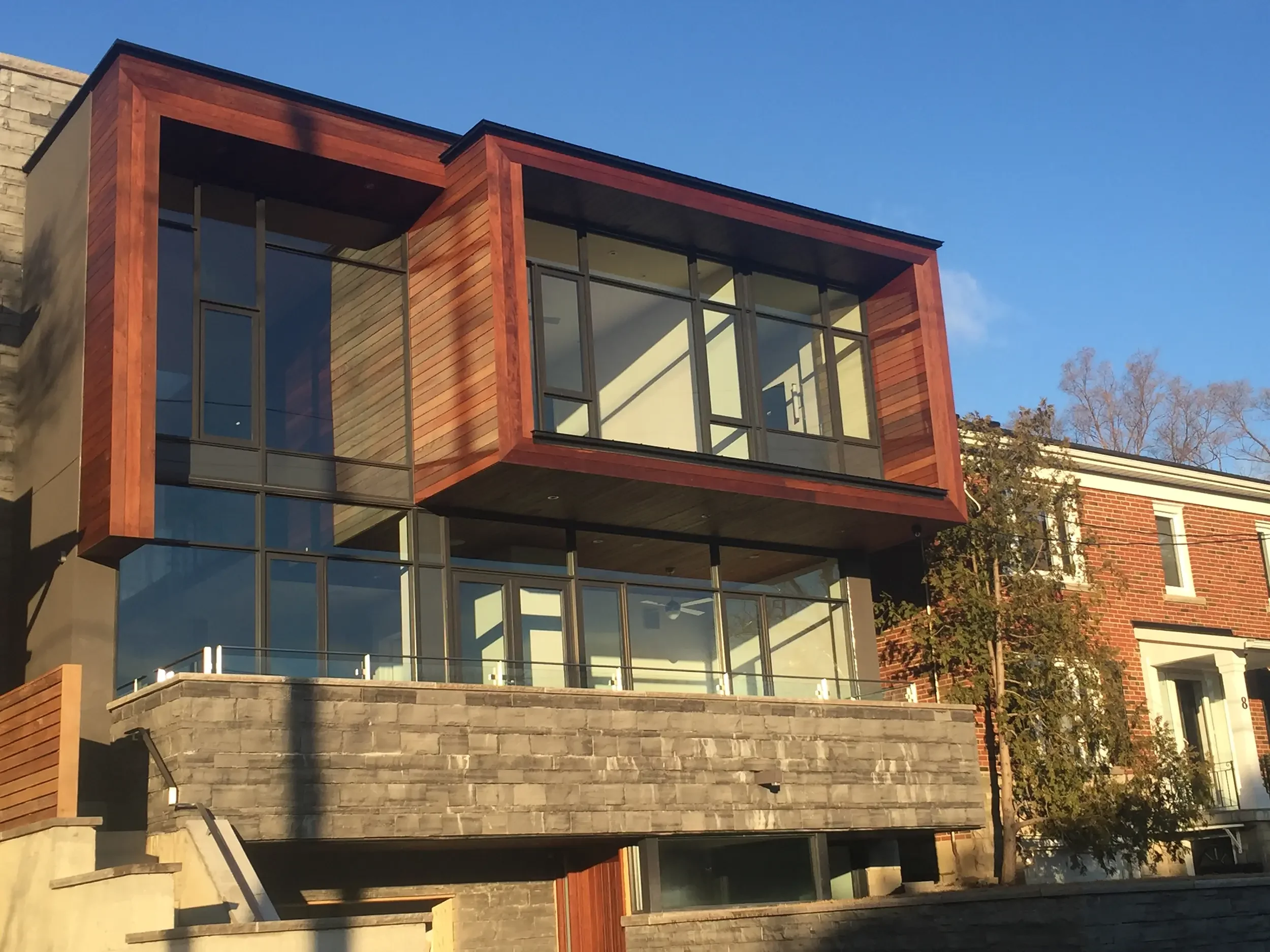
Exterior cladding is the first line of defence between your home and the elements. The material you choose affects how your home looks, how much maintenance it requires, how long it lasts, and how well it performs in Ontario's climate of freeze-thaw cycles, UV exposure, driving rain, and ice.
Here is how six common cladding materials compare.
What is Trespa Pura NFC?
Trespa Pura NFC is a high-pressure laminate (HPL) siding made from up to 70% wood fibres sealed with thermosetting resins. The surface is finished using Trespa's proprietary Electron Beam Curing (EBC) technology, which creates a non-porous layer that locks in colour and locks out moisture.
Lifespan: 25+ years with no degradation to the surface.
Maintenance: None. No painting, staining, or sealing — ever. Clean with water and mild soap.
Installation: Mounts as a ventilated rainscreen system on a wood or aluminum subframe using Trespa's proprietary clip system.
Warranty: 10-year colour stability warranty.
Best for: Homeowners who want the look of wood with zero maintenance. Pura NFC handles Ontario's freeze-thaw cycles, UV exposure, and driving rain without cracking, fading, or delaminating.
Watch out for: Higher upfront cost than fibre cement or vinyl. Limited to Trespa's available colour and profile range.
For a detailed breakdown, see our guide to Trespa Pura NFC for Canadian climates.
What is thermally modified wood?
Thermally modified wood — such as Thermory — is real wood that has been heated to approximately 200°C in a controlled, oxygen-free environment. This process permanently changes the wood's cell structure, making it resistant to rot, insects, and moisture absorption without chemical treatment.
Lifespan: 25–30+ years depending on species and exposure.
Maintenance: Low. Will weather to a silver-grey patina if left untreated, or can be maintained with periodic oiling to retain the original tone.
Installation: Installs on furring strips or clip systems with a ventilated cavity behind — a natural fit for rainscreen assemblies.
Warranty: Varies by manufacturer and species. Thermory offers warranties ranging from 15 to 25 years depending on product line.
Best for: Homeowners who want real wood appearance and texture with significantly improved durability over untreated lumber. The natural weathering look suits both modern and cottage-style architecture.
Watch out for: Thermally modified wood is lighter and more brittle than its untreated counterpart. Impact resistance is lower — it can dent or crack more easily than dense hardwoods.
What is Maibec factory-finished siding?
Maibec is a Quebec-based manufacturer of factory-finished Eastern white cedar siding. Every plank is kiln-dried and stain-coated on all six sides in a controlled environment, ensuring better stain absorption and uniformity than site-applied finishes.
Lifespan: 50-year warranty against wood rot when properly installed.
Maintenance: Moderate. Factory-applied solid stain is warranted for 15 years against cracking, peeling, and blistering. Re-staining is required periodically — typically every 15–20 years for solid stain, more frequently for semi-transparent finishes.
Installation: Available in lap, board and batten, and shingle profiles. The em+ series features end-matched tongue and groove joints for hidden fastener installation. Installs over furring strips as a rainscreen.
Warranty: 50 years against wood decay, 15 years on factory-applied solid stain finish.
Best for: Homeowners who want genuine wood siding with the quality advantage of factory finishing over site finishing. Maibec delivers the traditional cottage and craftsman look that no engineered product fully replicates.
Watch out for: Wood siding requires ongoing maintenance regardless of how well the factory finish performs initially. Re-staining is not optional — it is a warranty requirement. Budget for periodic refinishing over the life of the siding.
What is fibre cement cladding?
Fibre cement is a manufactured composite made from cement, sand, and cellulose fibres. It is fire-resistant, dimensionally stable, and available in a wide range of profiles including lap, panel, and shingle. Common brands include James Hardie and Cembrit.
Lifespan: 30–50 years.
Maintenance: Moderate. Requires repainting every 10–15 years. The substrate itself is durable, but the painted finish degrades with UV and weather exposure.
Installation: Can be installed as a rainscreen with furring strips or clip systems. Heavier than wood or HPL — structural support and fastening must be specified accordingly.
Warranty: Varies by brand. James Hardie offers a 30-year limited product warranty.
Best for: Homeowners who want a durable, fire-resistant cladding at a mid-range price point. Fibre cement is widely available and pairs well with most architectural styles.
Watch out for: Fibre cement is heavy and brittle. It requires careful handling during installation — cracked panels must be replaced, not repaired. The need for periodic repainting adds to lifetime maintenance costs.
What are metal cladding panels?
Metal cladding — typically aluminum or steel — is used in panel, plank, or cassette formats. Panels are powder-coated or anodized for colour and corrosion resistance. Metal cladding produces the slimmest profiles and sharpest lines of any cladding material.
Lifespan: 40–60+ years.
Maintenance: Very low. Powder-coated finishes resist fading, chalking, and corrosion. Periodic cleaning is the only maintenance required.
Installation: Lightweight and naturally suited to rainscreen assemblies. Mounts on clip or rail systems with a ventilated cavity behind.
Warranty: Varies widely. Premium systems offer 20–30 year finish warranties.
Best for: Modern and contemporary architecture where clean lines, sharp edges, and maximum design flexibility are the priority. Metal also works well as an accent material combined with wood or HPL.
Watch out for: Aluminum can dent on impact. Steel is heavier and can corrode if the powder coating is damaged in coastal or high-humidity environments. Metal cladding tends to be the highest cost option per square foot.
What are natural hardwood cladding options?
Natural hardwoods — primarily Ipe and Accoya — are premium cladding materials with exceptional durability. Ipe is a dense South American tropical hardwood that is naturally resistant to rot, insects, and moisture. Accoya is radiata pine that has been acetylated — a non-toxic chemical modification process that makes the wood dimensionally stable and highly rot-resistant.
Lifespan: Ipe: 40–75 years. Accoya: 50+ years above ground.
Maintenance: Ipe weathers to silver-grey if left untreated, or requires annual oiling to maintain its warm brown tone. Accoya accepts paint and stain exceptionally well and holds finishes longer than untreated wood.
Installation: Both install on furring strips or clip systems as rainscreen assemblies. Ipe is extremely dense — pre-drilling is required for every fastener.
Warranty: Accoya offers a 50-year warranty against rot above ground. Ipe warranties vary by supplier.
Best for: Homeowners who want the longest-lasting natural wood cladding available and are willing to pay a premium for it.
Watch out for: Ipe is one of the hardest woods in the world, which makes it labour-intensive to install — pre-drilling, carbide-tipped blades, and slower cut speeds are required. Accoya is easier to work with but carries a high material cost. Both are premium-priced.
How do these cladding materials compare?
The right cladding depends on your maintenance tolerance, aesthetic preference, and how long you need the installation to last.
Which cladding lasts the longest?
Ipe leads at 40–75 years, followed by Accoya at 50+ years above ground. Maibec cedar carries a 50-year rot warranty, though the finish will need re-staining well before the wood itself fails. Metal panels last 40–60+ years. Fibre cement falls in the 30–50 year range. Trespa Pura NFC is rated at 25+ years with no surface degradation, and thermally modified wood sits at 25–30+ years.
Which cladding requires the least maintenance over its lifespan?
Trespa and metal require zero refinishing — cleaning with soap and water is all that is needed, indefinitely. Fibre cement requires repainting every 10–15 years. Thermally modified wood needs periodic oiling to hold its original tone, or nothing if you accept the silver-grey patina. Maibec cedar requires re-staining every 15–20 years for solid stain or every 6–8 years for semi-transparent — this is a warranty condition, not optional. Ipe needs annual oiling to maintain colour, or nothing if you let it weather naturally.
What does that look like over 50 years?
A Trespa or metal installation requires nothing but occasional cleaning from year zero through year 50. A Maibec installation would need two to three full re-staining cycles. Fibre cement would need three to four repaints. The upfront material choice is only part of the equation — the labour and disruption of periodic refinishing add up significantly over decades.
Which cladding looks most like real wood?
Maibec and thermally modified wood are real wood — nothing replicates genuine timber grain and texture. Trespa Pura NFC is the closest engineered alternative, convincing at a distance but distinguishable up close.
Which cladding offers the best fire resistance?
Fibre cement and metal are non-combustible — important for wildfire-prone areas or projects with fire separation requirements. All wood-based materials, including Maibec, Thermory, Ipe, and Accoya, are combustible.
Does cladding material affect how well the wall is protected?
The cladding material deflects rain, snow, and UV — but it is the wall assembly behind the cladding that determines how well the structure is protected from moisture. A rainscreen cladding system creates a ventilated air cavity behind the cladding that drains and dries any moisture that gets through. All six materials covered in this guide perform well in a rainscreen assembly, and several — including Trespa — require or recommend rainscreen installation as part of their warranty terms.
Have questions about which cladding material is right for your project? Contact us to discuss your options.
Odin Agnuk Ltd. installs premium cladding materials including Trespa, Maibec, Thermory, Ipe and Accoya throughout Grey County and the Greater Toronto Area. View our exterior services to learn more about what we offer.
The information provided in this guide is for general educational purposes only. Product specifications, warranties, and performance characteristics may change without notice. Odin Agnuk Ltd. is not liable for purchasing decisions made based on this content. Homeowners should independently verify all product information, consult manufacturer specifications, and conduct their own research before making material selections. Always confirm current product details with manufacturers or authorized dealers prior to purchase.