
Backyard Saunas: Planning, Placement and What Ontario Homeowners Need to Know
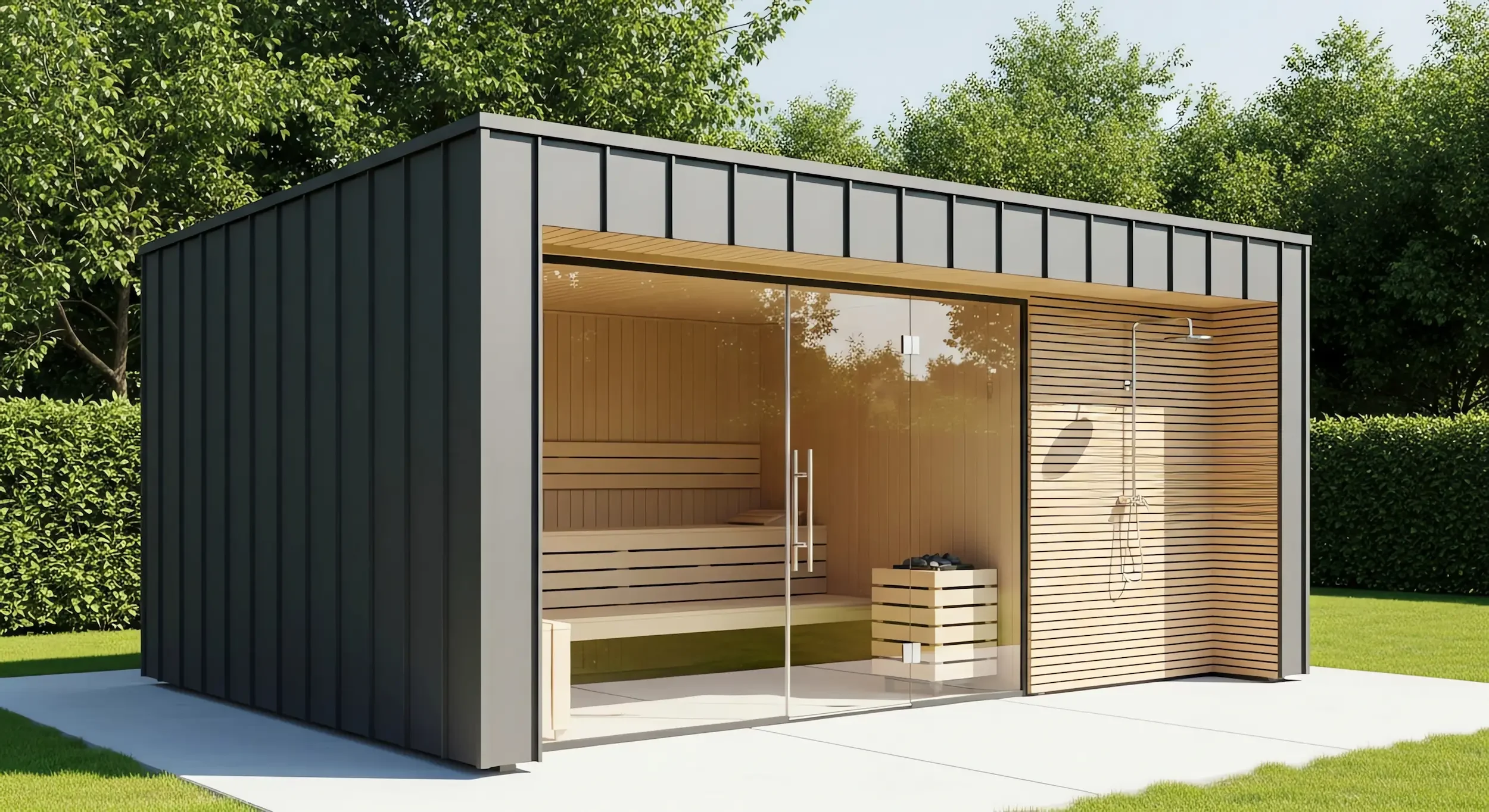
A backyard sauna is one of the most requested outdoor additions Brian Welch and the team at Odin Agnuk see from homeowners in Grey County and the GTA. The appeal is straightforward — a private, year-round wellness space steps from your back door. But a sauna involves electrical work, a proper foundation, drainage planning, and municipal permits. Here is what to think through before you build.
What type of sauna heater should you choose?
There are four main heater types, and the right choice depends on your site, your budget, and how you want the sauna to feel.
Electric. The most common choice for residential backyard saunas. Clean, consistent heat with precise temperature control. Requires a dedicated 240V circuit installed by a licensed electrician. Electric heaters must be controlled by a timer that cannot exceed one hour, per Ontario Electrical Safety Code requirements.
Wood-burning. Traditional and well-suited to cottage and rural properties where electricity may not be readily available. Produces a different quality of heat — slower to warm up, but preferred by many sauna purists. Requires a chimney, spark arrestor, and clearances from combustible materials.
Gas. Less common in residential applications. Requires a gas line installed by a TSSA-licensed contractor, similar to an outdoor kitchen.
Infrared. Heats the body directly rather than the air. Lower operating temperature, lower energy use, and simpler electrical requirements. A different experience than a traditional sauna — worth trying before committing.
Where should you place a backyard sauna?
Placement affects everything — convenience, privacy, utility connections, and how well the sauna integrates with the rest of your outdoor space.
Proximity to the house. A shorter distance means shorter electrical runs (lower cost), easier access in winter, and proximity to a bathroom for showering after. Most homeowners place the sauna within 15–30 feet of the house.
Level, well-drained ground. The site must be level and graded to direct water away from the sauna base. Standing water beneath or around the structure leads to rot, frost heave, and foundation failure.
Wind shelter. Position the sauna where it is sheltered from prevailing winds — particularly important in Grey County and lakefront properties. A sheltered location retains heat more efficiently and makes the walk between the sauna and the house more comfortable in winter.
Privacy. Consider sightlines from neighbouring properties and the street. A sauna placed behind a privacy screen, fence, or natural landscaping is more enjoyable year-round.
Southern exposure. A south-facing orientation captures natural sunlight, which helps warm the sauna passively and reduces energy consumption.
What foundation does a backyard sauna need?
A sauna must sit on a stable, level base that prevents frost heave and keeps the structure off the ground.
Concrete slab. The most durable option. Poured on compacted gravel with proper drainage. Prevents shifting and settling in Ontario's freeze-thaw cycles.
Concrete patio stones or piers. A cost-effective alternative for prefab or kit saunas. Piers must be set below the frost line to prevent heaving.
Gravel pad. Suitable for smaller, lighter sauna kits. The gravel provides drainage and a level surface, but does not prevent frost movement as effectively as concrete.
Avoid: Placing a sauna directly on grass, bare soil, or an ungraded surface. Moisture wicks into the wood, and the structure will shift as the ground freezes and thaws.
What permits do you need for a backyard sauna in Ontario?
Permit requirements depend on the sauna's size, construction method, and utility connections.
Electrical permit. Required for any hardwired sauna heater (240V). Must be filed with the ESA (Electrical Safety Authority) before work begins, and the installation must be performed by a licensed electrician and inspected.
Building permit. Canada's National Building Code generally exempts accessory structures under 107 square feet (10 square metres) from building permits. However, municipal bylaws vary — some municipalities in Grey County and the GTA have additional setback, height, or lot coverage requirements. Always check with your local building department before ordering.
Wood-burning stove considerations. A wood-burning sauna may require additional clearances and compliance with local fire codes. Consult your municipality and fire department.
The safest approach: Call your local building department before you buy. A five-minute call can prevent a costly relocation or forced removal after the fact.
How does a sauna fit into a larger outdoor living plan?
A sauna works best when it connects to the rest of your outdoor space rather than sitting in isolation.
Cool-down zone. A cold plunge, outdoor shower, or rinse station nearby completes the sauna ritual and keeps the experience outdoors.
Deck or patio. A seating area adjacent to the sauna for cooling off between sessions — especially enjoyable in winter.
Fire pit or lounge. A post-sauna gathering space with a fire pit extends the evening and gives guests a reason to stay outside.
Outdoor kitchen. Pairing a sauna with an outdoor kitchen or barbecue area turns the backyard into a complete entertainment destination.
For a deeper look at how all of these elements work together, see our guide to designing an outdoor entertainment area.
Brian Welch and the team at Odin Agnuk design saunas as part of a complete outdoor living plan — integrating the structure, landscaping, decking, screening, and utilities into a single cohesive project.
Have questions about adding a sauna to your property? Contact us to discuss placement, construction, and how it fits with your outdoor space.
Odin Agnuk Ltd. designs and builds outdoor living spaces — including saunas, entertainment areas, and exterior renovations — throughout Grey County and the Greater Toronto Area. View our exterior projects or explore our services.
The information provided in this guide is for general educational purposes only. Product specifications, warranties, and performance characteristics may change without notice. Odin Agnuk Ltd. is not liable for purchasing decisions made based on this content. Homeowners should independently verify all product information, consult manufacturer specifications, and conduct their own research before making material selections. Always confirm current product details with manufacturers or authorized dealers prior to purchase.