
Deck Railing Options Compared: Glass, Cable, Aluminum and Wood
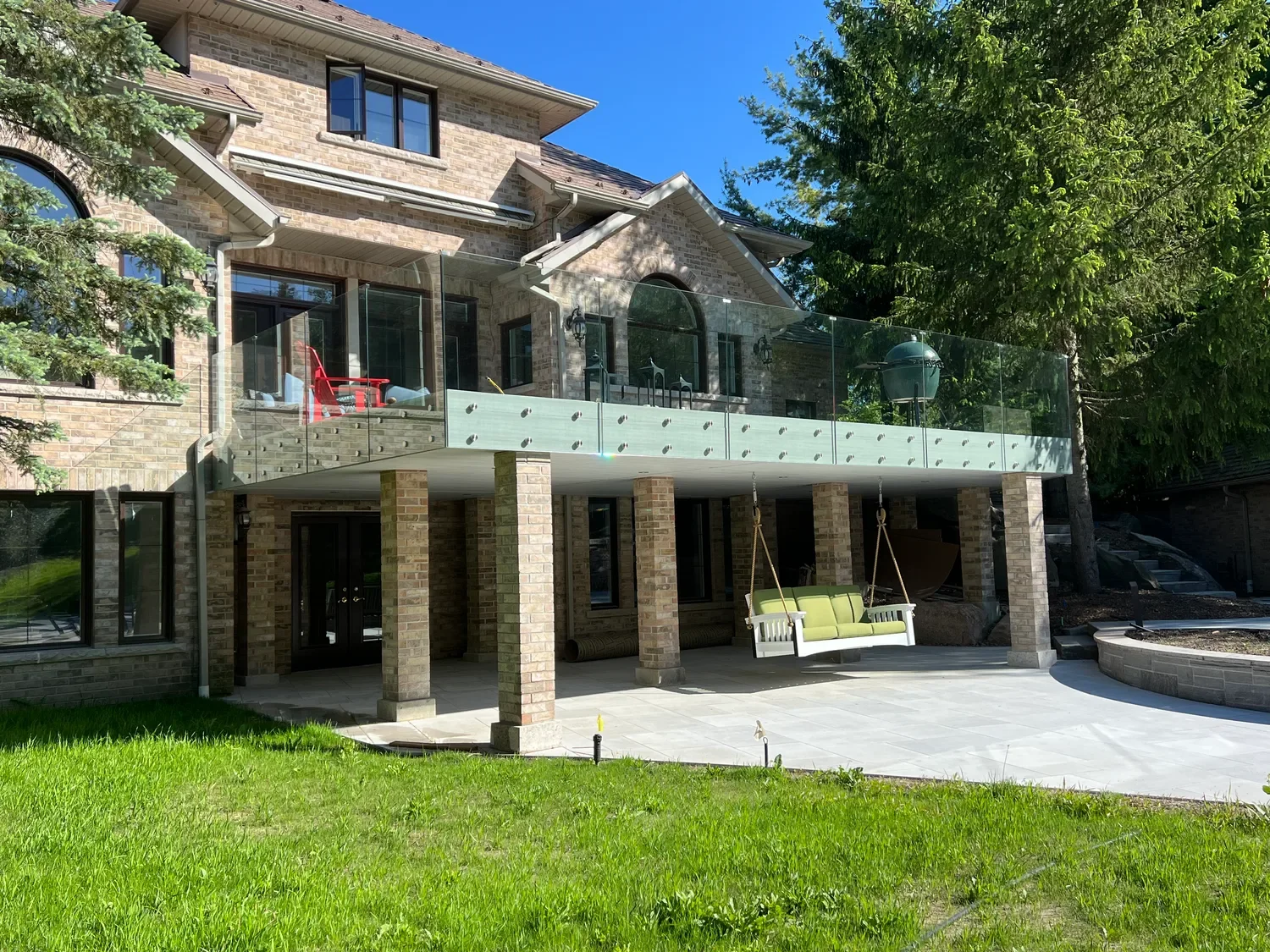
In Ontario, any deck surface more than 24 inches (610mm) above grade requires a guard — minimum 36 inches high for decks under 5 feet 11 inches above grade, and 42 inches for anything higher. Infill gaps cannot exceed 4 inches. Those are the code minimums. Beyond code, the railing defines how the deck looks and feels more than almost any other element.
What are glass deck railings?
Tempered safety glass panels mounted in one of three ways — between aluminum or stainless steel posts, in surface-mounted base rails on the deck surface, or side-mounted to the deck fascia using standoff spacers. The most unobstructed view of any railing type — and the only railing that also blocks wind.
Visibility: Best in class. The glass virtually disappears, making the deck feel open and connected to the landscape. Side-mounted standoff systems and base rail systems are even more transparent than post-mounted glass because there are no vertical posts interrupting the sightline.
Maintenance: Moderate. Fingerprints, pollen, and water spots require periodic cleaning — more often in heavily treed or lakefront areas.
Durability: Tempered glass will not corrode, rot, or fade. Hardware should be marine-grade stainless or powder-coated aluminum.
Wind protection: Excellent — a major advantage on elevated decks and exposed lakefront properties in Grey County.
Best for: Properties with a view. Waterfront, hilltop, and elevated decks where sightlines are the priority.
Watch out for: Highest upfront cost of all railing types. Scratched or cracked panels must be fully replaced — glass cannot be repaired.
What are cable deck railings?
Horizontal stainless steel cables tensioned between posts. Nearly invisible when looking through them, with a clean modern aesthetic.
Visibility: Excellent. Cables disappear from most angles, though they are slightly visible head-on.
Maintenance: Low. Cables require periodic tension checks — they loosen over time and need re-tensioning. Specify 316 marine-grade stainless in humid or lakefront environments to prevent corrosion.
Durability: Very good. Stainless cables last decades. Posts are typically powder-coated aluminum.
Wind protection: None. Cables do not block wind.
Best for: Modern and contemporary homes. Pairs well with wood, composite, or aluminum posts for a hybrid look.
Watch out for: Horizontal cables can be a climbing hazard for small children — some Ontario municipalities have additional restrictions. Where horizontal cables are not permitted, vertical cable infill is an alternative that meets the same anti-climbing requirements as traditional pickets while maintaining the thin, nearly invisible aesthetic. Check local bylaws before specifying.
What are aluminum deck railings?
Powder-coated aluminum posts, rails, and balusters. The most versatile railing option — available in everything from traditional vertical pickets to slim modern profiles.
Visibility: Good. Slim-profile systems minimize visual obstruction. Not as open as glass or cable, but far less bulky than wood.
Maintenance: Virtually none. Aluminum does not rust, rot, or need painting. Soap and water is all it requires.
Durability: Excellent. Handles Ontario's freeze-thaw, UV, and moisture without degradation. Powder-coated finishes resist fading and scratching.
Wind protection: Minimal with standard pickets. Can be combined with glass panel inserts where wind is a concern.
Best for: Any style. Aluminum adapts to traditional, transitional, and modern homes equally well. Works on a front porch as effectively as a backyard deck.
Watch out for: Aluminum dents on impact. Specify commercial-grade or structural aluminum for decks with heavy traffic.
What are wood deck railings?
Natural lumber — typically cedar, pressure-treated pine, or Ipe — for posts, rails, and balusters. The most traditional option and the warmest aesthetic.
Visibility: Moderate. Wood components are bulkier than metal or cable, reducing sightlines.
Maintenance: High. Requires staining or painting every 2–3 years in Ontario's climate. Skipping maintenance accelerates rot and structural failure.
Durability: Cedar and pressure-treated lumber last 15–20 years with consistent maintenance. Ipe lasts 30+ years but is expensive and labour-intensive.
Wind protection: Moderate with solid panels or tightly spaced balusters.
Best for: Traditional, cottage, and heritage homes where the warmth of real wood is part of the design. For more on wood options, see our guide to cladding materials.
Watch out for: Highest maintenance of all railing types. If you choose wood, budget for regular refinishing — it is a requirement, not an option.
Which railing should you choose?
Preserving a view: Glass or cable. Glass adds wind protection. Cable does not.
Lowest maintenance: Aluminum. Zero refinishing, decades of durability.
Warmest aesthetic: Wood — but commit to the maintenance. Or pair aluminum posts with a wood top rail for warmth where you touch it and durability everywhere else.
Wind exposure: Glass is the only railing that meaningfully blocks wind while maintaining an open view.
For how railings integrate with the broader outdoor space, see our guides to front porch design, privacy screens, and outdoor entertainment areas.
Have questions about railing options? Contact us to discuss what works for your home.
Odin Agnuk Ltd. designs and builds decks, porches, and exterior renovations throughout Grey County and the Greater Toronto Area. View our exterior projects or explore our services.
The information provided in this guide is for general educational purposes only. Product specifications, warranties, and performance characteristics may change without notice. Odin Agnuk Ltd. is not liable for purchasing decisions made based on this content. Homeowners should independently verify all product information, consult manufacturer specifications, and conduct their own research before making material selections. Always confirm current product details with manufacturers or authorized dealers prior to purchase.