
Front Porch Design: How to Plan a Porch That Adds Curb Appeal and Value
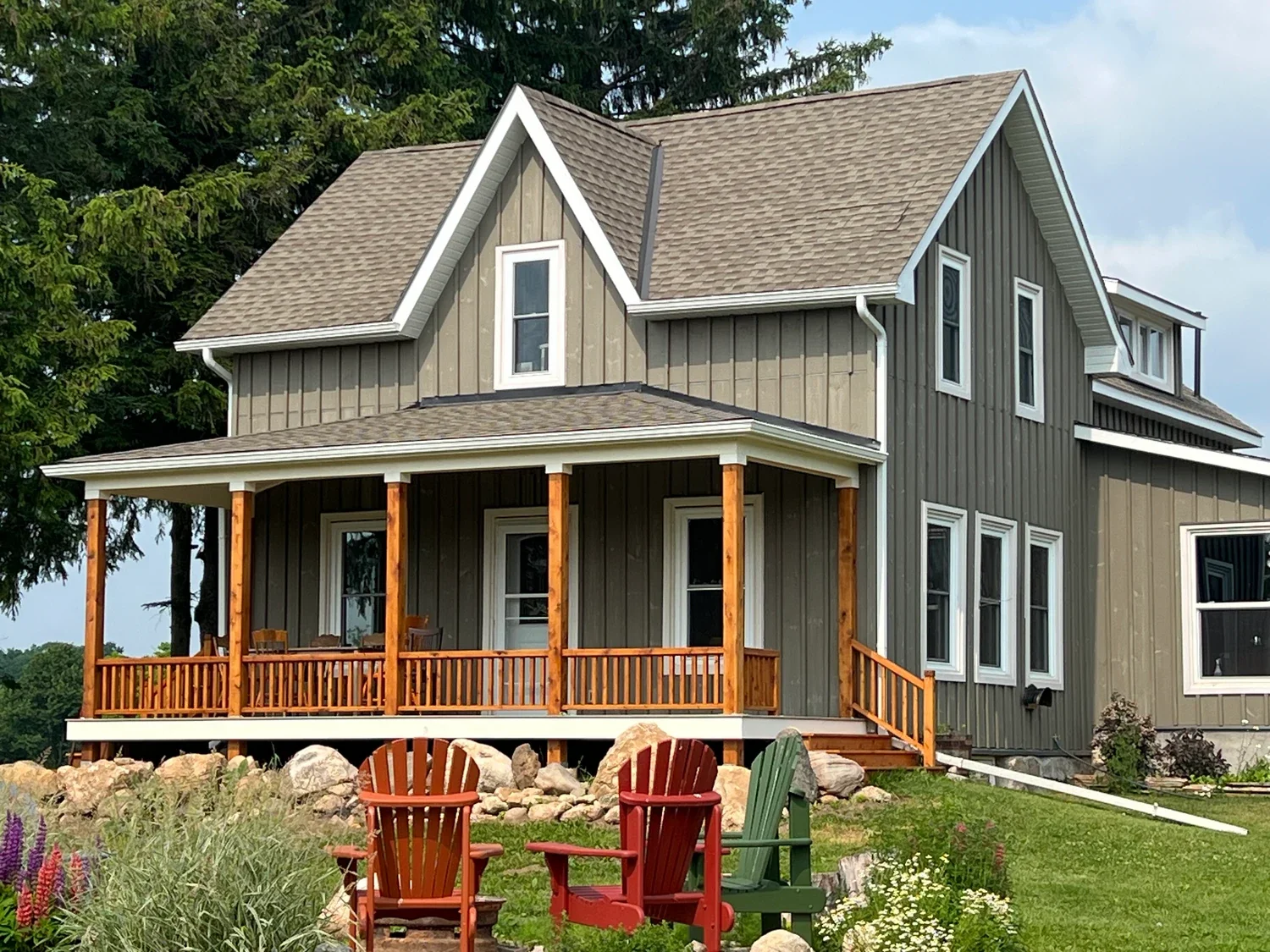
A front porch anchors the entire front elevation of your home. It is the first thing visitors notice and, when designed well, one of the strongest drivers of curb appeal and property value. Brian Welch, owner of Odin Agnuk Ltd., builds front porches that are designed with the house — not bolted on as an afterthought.
How deep and wide should a front porch be?
A porch needs enough depth to actually use. Anything less than 6 feet deep is a landing, not a porch — there is no room for chairs or comfortable movement. Eight feet is the sweet spot for a porch that functions as an outdoor room. Width should be proportional to the front facade — a porch that spans the full width of the home creates symmetry, while a partial-width porch works for targeted entryway upgrades.
Ceiling height matters too. Standard is 8–10 feet. Go too low and the porch feels cramped. Go too high without scaling up the columns and the proportions look wrong.
Why do most porches look like they do not belong?
Three things make a porch look like an addition instead of an original feature.
Roof mismatch. The porch roof pitch, material, and fascia should match or complement the main roof. A flat porch roof on a steep-gabled house always looks disconnected.
Wrong column proportions. Column width should be roughly one-tenth to one-twelfth of column height. Skinny columns on a tall porch look flimsy. Oversized columns on a small porch overwhelm the entry.
Unrelated materials. If the house is clad in Maibec or dark metal panel, the porch materials should reference that palette — not introduce something entirely different.
What materials hold up best on a front porch in Ontario?
Ontario's freeze-thaw cycles, ice, salt, and UV exposure eliminate materials that work fine in milder climates.
Decking surface. Composite or PVC decking delivers the best durability with the least maintenance. Natural wood like Ipe looks exceptional but requires annual refinishing. For a detailed comparison, see our guide to composite vs PVC vs PVC composite.
Columns. PVC-wrapped wood columns resist rot and never need painting. Aluminum columns suit modern designs. Solid wood columns look traditional but need regular finishing.
Railings. Your railing choice — glass, cable, aluminum, or wood — defines the porch's character as much as the columns do.
Ceiling. Tongue-and-groove PVC beadboard is the most durable porch ceiling. It will not rot, peel, or need repainting — unlike painted wood, which requires refinishing every few years.
What finishing details make the biggest difference?
The details separate a builder-grade porch from one that feels intentional.
Lighting. An oversized pendant or lantern above the entry makes a stronger statement than an undersized fixture. Add wall sconces flanking the door for balanced warmth at eye level, and low-voltage step lights on stair risers for safety.
Built-in planters. Two matching planters flanking the front door is one of the simplest curb appeal upgrades. They anchor the entryway and add seasonal colour.
Consistent hardware. Matching finishes across house numbers, door handle, mailbox, and light fixtures create a cohesive look. Mixing finishes reads as unplanned.
Do you need a permit for a front porch in Ontario?
In most Ontario municipalities — yes. A new front porch typically requires a building permit because it involves a foundation or footings, structural framing, and potential changes to the building envelope. In Ontario, a porch foundation must be equal in depth to the foundation of the building it is attached to — meaning full frost-depth footings, not deck blocks. Electrical work for lighting requires a separate ESA permit. Check with your local building department before starting.
Have questions about a front porch project? Contact us to discuss what would work best for your home.
Odin Agnuk Ltd. designs and builds front porches, entryways, and exterior renovations throughout Grey County and the Greater Toronto Area. View our exterior projects or explore our services.
The information provided in this guide is for general educational purposes only. Product specifications, warranties, and performance characteristics may change without notice. Odin Agnuk Ltd. is not liable for purchasing decisions made based on this content. Homeowners should independently verify all product information, consult manufacturer specifications, and conduct their own research before making material selections. Always confirm current product details with manufacturers or authorized dealers prior to purchase.